


2026 Wood-to-Tile Transition Ideas That Redefine Seamless Design
Step into 2026 with seamless design. This year’s top wood-to-tile transition ideas focus on continuity, craftsmanship, and calm interiors. Discover how Easiklip hardwood flooring creates effortless connections between oak and tile, whether through flush finishes, slim metal inlays, or tone-on-tone pairings that define modern living.

The new year brings a new design language. In 2026, flooring transitions are no longer hidden; they’re celebrated as part of the home’s architectural rhythm. Spaces are opening up, materials are blending, and homeowners are looking for continuity from one room to the next. According to Architectural Digest’s 2026 Design Forecast, natural textures and uninterrupted sightlines continue to dominate interior trends, with wood and stone taking centre stage in modern homes. The way those materials meet, particularly in wood-to-tile transition ideas 2026, is now a defining detail of luxury design.
Designers are embracing this subtle craftsmanship. A well-executed hardwood-to-tile transition not only improves flow but also prevents tripping hazards, moisture seepage, and uneven wear. It’s the small, precise element that makes an entire floor plan feel intentional.
If 2025 was about texture, 2026 is about cohesion. The goal is not just to mix materials but to connect them beautifully. In the sections ahead, explore the top wood to tile transition ideas for 2026 that define the year’s most seamless interiors, and see how thoughtful planning transforms these junctions into quiet design statements.
Why Transitions Matter More Than Ever
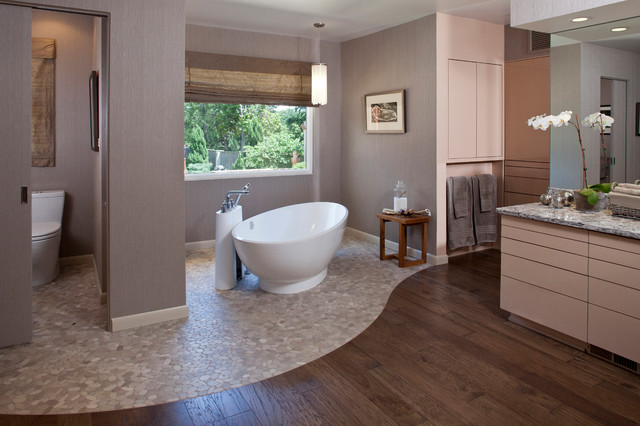
In 2026, flooring transitions are being recognized as both a design and performance essential. As more homes blend hardwood, tile, and stone across open layouts, the junction between materials determines how fluid a space feels and how long it lasts.
Different materials move differently. Wood expands and contracts with humidity, while tile remains rigid. Without a well-planned transition, those natural shifts can lead to gaps, cracks, or uneven edges over time. One example, from NWFA, shows that across ten boards at five inches each, shrinkage from a large drop in humidity can exceed 0.75 inches across the total width. This is why perimeters and transitions must allow for movement and why floating systems are recommended in mixed material spaces.
A well-designed transition is more than a technical fix. It’s a quiet design detail that adds continuity and polish, the difference between a renovation that looks good and one that feels complete.
2026 Trend One: Flush Transitions for Open Living
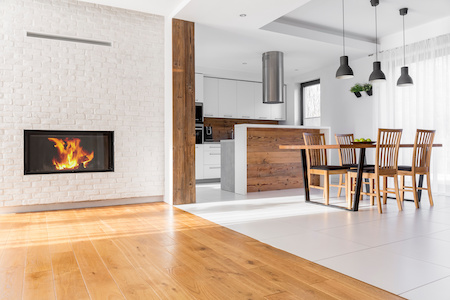
The defining wood to tile transition idea of 2026 is subtlety. Flush transitions, where hardwood and tile meet at the same height, have become the benchmark for modern, architectural interiors. They create smooth sightlines, eliminate trip edges, and visually expand a room.
This approach complements the ongoing shift toward open-concept living. By keeping floors level and continuous, homeowners can connect kitchen, dining, and living zones without visual breaks. According to Architectural Digest’s 2026 Interior Forecast, seamless transitions are a key design focus in both residential and commercial spaces, blending “textural contrast with structural calm.”
For perfect alignment, confirm total floor heights, including underlayment, before installation. A sleek brass or oak strip can frame the join subtly while maintaining a high-end, gallery-inspired feel.
Design Tip: Pair pale European oak with large-format neutral tile to create light continuity and depth, a hallmark of 2026’s warm minimalist interiors.
Explore More: See all floor transition ideas for design inspiration and installation guidance.
2026 Trend Two: Textural Contrast with Metal or Stone Inlays
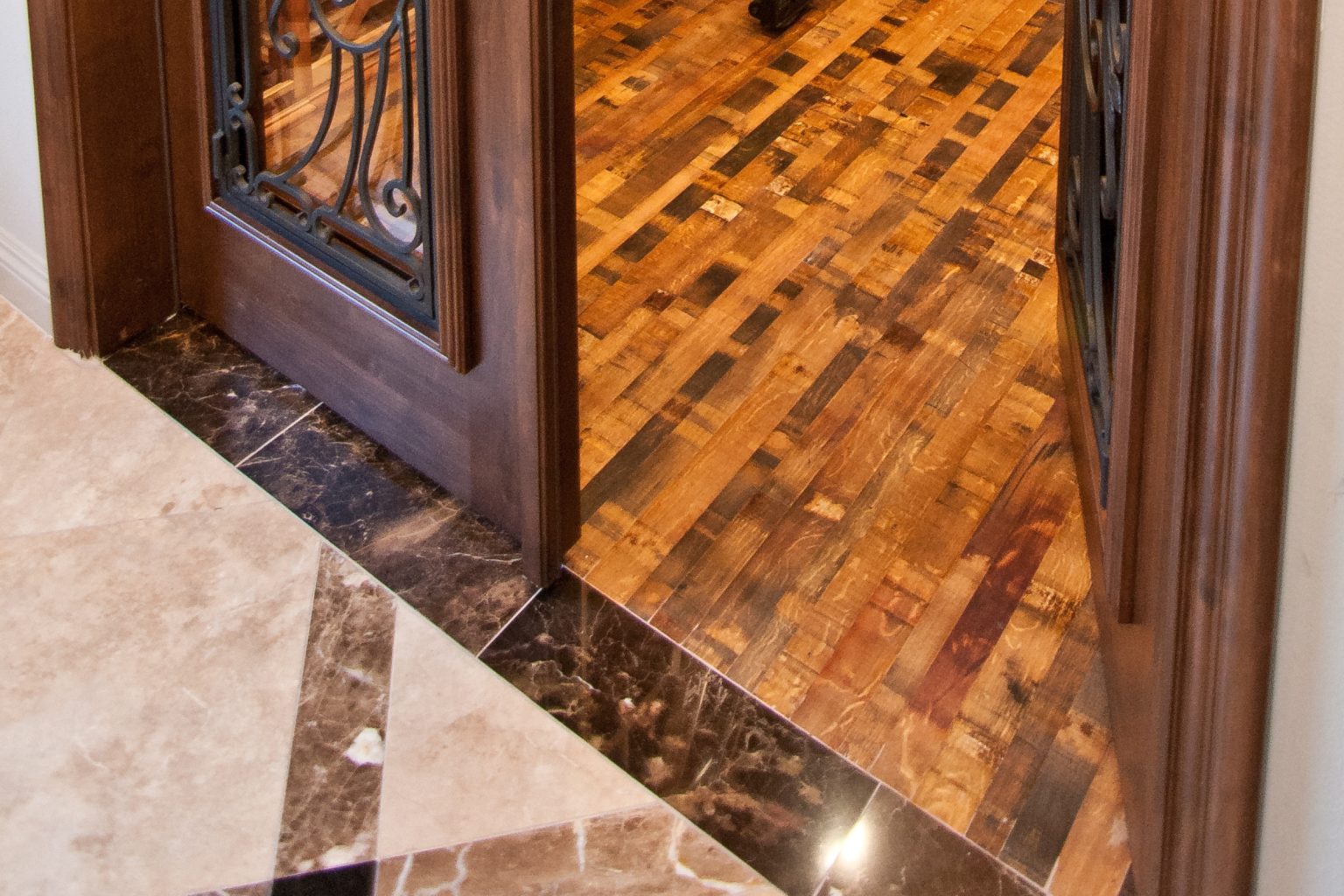
The blend of wood and tile is evolving from a simple join into a crafted design moment. In 2026, metal and stone inlays are being used to highlight transitions rather than hide them. Think brushed brass, matte black, or slim marble strips framing the point where oak meets porcelain, a subtle line that signals intention and precision.
Design publications like Dezeen note that architectural detailing is moving toward “quiet ornamentation,” where small material contrasts provide depth without clutter. These fine accents elevate minimalist interiors and define movement through open spaces.
When planning an inlay, measure the thickness of the insert precisely to keep surfaces flush. Use colour cues from fixtures or lighting, brass echoes warm metallics, while steel complements cooler tones like grey stone or concrete.
Design Tip: For dramatic contrast, pair Easiklip’s Natural Oak with dark veined marble or black porcelain to create a soft–hard material dialogue that defines 2026 luxury interiors.
2026 Trend Three: Warm Minimalism and Tone-on-Tone Pairings
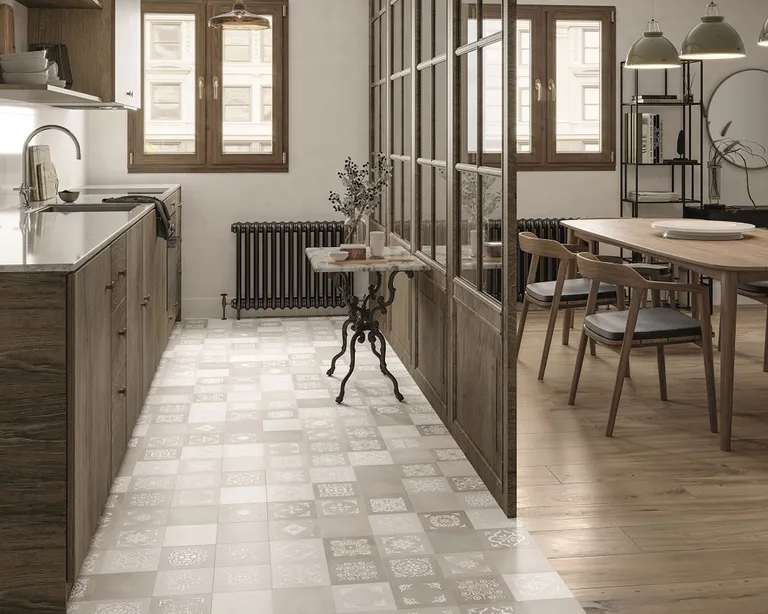
Minimalism isn’t cold anymore; it’s warm, organic, and tactile. The new wave of “warm minimalism” pairs similar tones and textures to create flow without monotony. In flooring, that means matching the hue of your hardwood and tile so the transition almost disappears.
Design platforms such as Houzz highlight this as one of the top aesthetic wood to tile transition ideas for 2026: interiors that feel unified through tone, not contras. Light oak beside cream porcelain, or sand-toned hardwood against travertine tile, achieves visual calm while maintaining distinct texture.
To preserve that seamless effect, finish any visible seams with the best wood filler for hardwood floors in a shade that matches your flooring. This keeps edges tight and invisible while protecting against moisture.
Design Tip: Pair Easiklip’s white oak with pale travertine tile for a spa-like feel, or choose smoked oak beside taupe porcelain for a richer, modern look that captures 2026’s understated luxury trend.

2026 Trend Four: Practical Profiles: T-Mouldings, Reducers, and Thresholds
Even in a year defined by seamless design, practicality never goes out of style. Not every space allows for a perfectly level surface, and that’s where smart transition profiles come in.
T-mouldings, reducers, and thresholds remain the quiet heroes of flooring. They protect edges, accommodate height differences, and maintain expansion space between materials. The National Wood Flooring Association (NWFA) recommends transition mouldings wherever a floating floor meets another surface to allow for natural movement.
When working with uneven subfloors, a matching oak reducer creates a gentle slope that’s both functional and elegant. For a contemporary touch, metal or colour-matched composite profiles can outline spaces with barely visible detail.
Design Tip: In high-traffic areas, keep transitions flush but framed. A minimalist threshold in brushed steel or oiled oak provides definition while protecting corners from wear.
Explore More: Find inspiration in floor transition ideas for blending practicality with style.
Detailing That Makes the Difference
The most successful transitions don’t draw attention; they disappear into good craftsmanship. Attention to detailing ensures your wood and tile floors stay stable, aligned, and beautiful for decades.
Start with preparation. Subfloors must be level and dry. A premium underlayment adds comfort and helps prevent moisture transfer, especially in kitchens, entries, or coastal regions. Learn more in The Best Underlayment for Hardwood Floors.
Next, finish edges with precision. Use a wood filler to close small gaps or nail holes before sealing. Flexible sealants can also protect transitions in damp areas such as bathrooms or laundry rooms.
According to Brett Miller, VP of Technical Standards at the NWFA, “Great flooring isn’t just about the boards; it’s about the details that hold them together.” Consistent sealing, humidity control, and edge care are what transform an installation into a lasting feature.
Design Tip: Keep interior humidity between 35 – 55 percent year-round, and choose matte finishes to mask fine dust or sand that collects near thresholds.
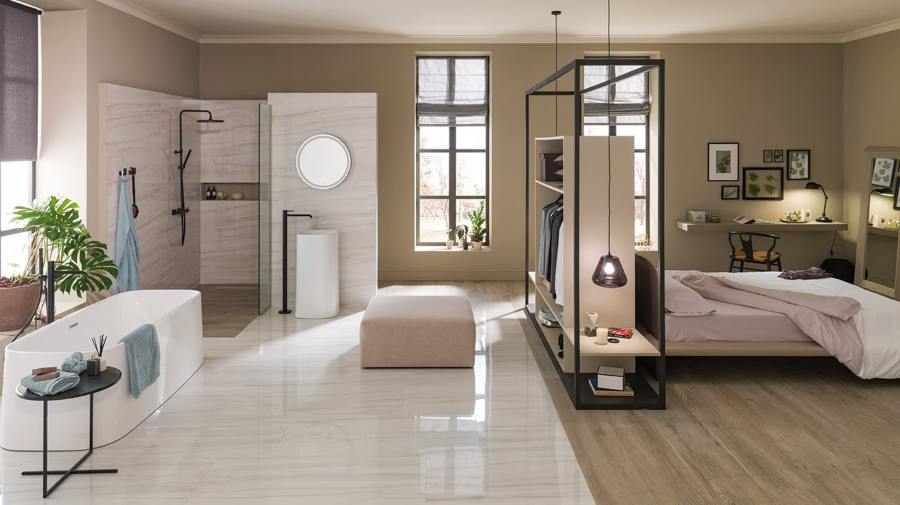
Common Mistakes to Avoid in 2026 Remodels
Even the most beautiful floors can fall short when transitions are overlooked. With the wood to tile transition ideas of 2026, where open layouts and clean lines dominate, a poorly executed join can interrupt the flow of an entire space. Here are the pitfalls to avoid when planning your next remodel.
1. Ignoring Expansion Space
Wood expands and contracts with seasonal humidity while tile remains stable. If the join is locked tight, edges can lift, finishes can craze, and gaps can form by winter. Leave a continuous expansion gap along the entire interface and conceal it with a slim profile, inlay, or colour-matched sealant that remains flexible. Aim for steady indoor humidity in the 35 to 55 percent range so the transition remains consistent through the seasons.
Quick check
• Slide a business card along the hidden gap to confirm space is continuous
• Inspect after the first heating and cooling cycles to verify the line is still true
2. Mixing Incompatible Materials
Hard porcelain beside softwood or open-pore stone beside fine-grain oak can chip if edges meet without protection. Textured tiles can also chew the finish on wood if the height is off. Use a slim metal, stone, or oak inlay to distribute pressure, or a T-moulding where movement must be more generous. Seal stone or terrazzo before fitting the join so grout haze and moisture do not wick into the wood edge.
Quick check
• Run a fingertip across the seam to confirm equal bearing on both sides
• If you feel a sharp tile edge, micro-bevel the tile or introduce a thin inlay
3. Uneven Subfloors
A few millimetres of height difference can create a visible ridge and a trip point. Confirm total build height, including tile, thinset, hardwood, and underlayment, then correct with self-leveler or underlayment shims before any finish flooring is placed. For larger spans, laser lines help you read the room from doorway to doorway so the transition aligns to sightlines and stays perfectly flat.
Quick check
• Lay a 1.8 metre straightedge across the join area and look for daylight
• Variations greater than 3 millimetres over 2 metres call for levelling
4. Skipping Edge Sealing
Water and cleaning solutions can seep into the meeting line where grout, mortar, or micro-dust meet the oak edge. Seal grout fully, then protect the wood side with a compatible finish and a discreet bead of flexible sealant where needed. In kitchens, entries, and baths, consider a profile that lifts the wood edge slightly clear of standing moisture while still reading as flush. Finish your install with wood filler and a flexible edge caulk for extra protection.
Quick check
• Drip a teaspoon of water near the join and watch for wicking
• If you see darkening at the wood edge, reseal before regular use
5. Forgetting Visual Continuity
Transitions should respect the architecture. Centre the line to doorways, align to cabinet plinths, and run with dominant window walls so the seam feels intentional from every angle. Dry-fit a one-metre sample of both materials, then view it in morning and evening light because raking light can exaggerate any misalignment or height error.
Quick check
• Mark a chalk line that extends through the room and confirm it meets key features
• Photograph from seated and standing eye levels to judge the read of the seam
Design Tip: Always dry-fit a sample of your wood and tile together before committing to materials. Light direction and texture can dramatically change how the transition appears once installed.

Expert Solutions: How Easiklip Simplifies Every Transition
Easiklip was engineered for these challenges. Each solid oak plank locks into a patented clip system that lets your floor expand naturally without separating from adjoining materials. It’s the simplest way to achieve precision transitions that stand the test of time.
Here’s how Easiklip flooring addresses every major transition mistake:
-
Expansion gaps: The floating design manages movement automatically.
-
Height alignment: Uniform plank thickness simplifies flush transitions.
-
Profile selection: Works with T-mouldings, reducers, and flush strips.
-
Edge sealing: Boards can be lifted or replaced easily for refinishing.
-
Design flow: Natural tones pair effortlessly with today’s leading tile and stone finishes.
Brett Miller of the NWFA puts it best: “True craftsmanship isn’t about hiding imperfections; it’s about anticipating them. The right system lets materials live together beautifully.”
Whether you’re remodeling a single room or reimagining an entire home, choosing a flexible, well-engineered floor system like Easiklip gives your design a cleaner finish and one that lasts.
Design Tip: Before your next renovation, order a sample pack to see how Easiklip oak tones complement your tile or stone palette under natural light.
Modern Flow for the Year Ahead
This design story is one of connection between rooms, materials, and light. The best wood to tile transitions ideas far 2026 aren’t just technical details; they’re the signature of thoughtful design.
From the elegance of flush joins to the craftsmanship of metal inlays, today’s wood-to-tile transition ideas turn functional boundaries into works of subtle architecture. And with Easiklip flooring, achieving that look has never been easier. Each solid European oak plank locks in place with precision, allowing natural expansion while maintaining seamless alignment, ideal for modern homes that prize simplicity and flow.
Before the year’s next project begins, explore floor transition ideas and how to install an Easiklip floating hardwood floor for a smoother, smarter design.
“True craftsmanship isn’t just what you see; it’s what you don’t notice,” says Sarah Richardson, interior designer and HGTV host. In 2026, that means transitions that disappear seamlessly beneath your feet.
For 2026, design isn’t about separation; it’s about connection. Easiklip brings that vision home, one seamless transition at a time.


